
Stump grinding,down to a science
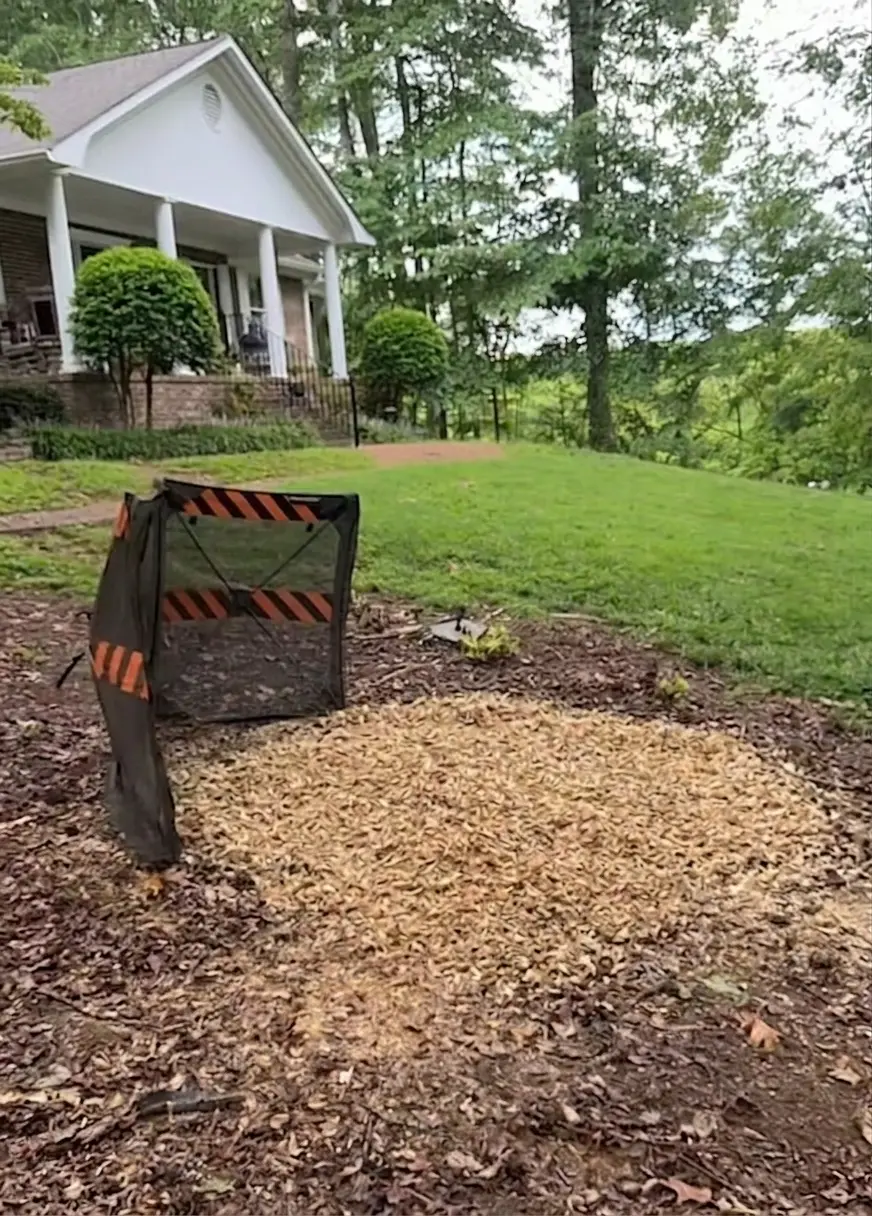
One crew, one machine, one standard: 8 inches below grade, chips handled, yard walked before we leave.
Below grade is the whole point
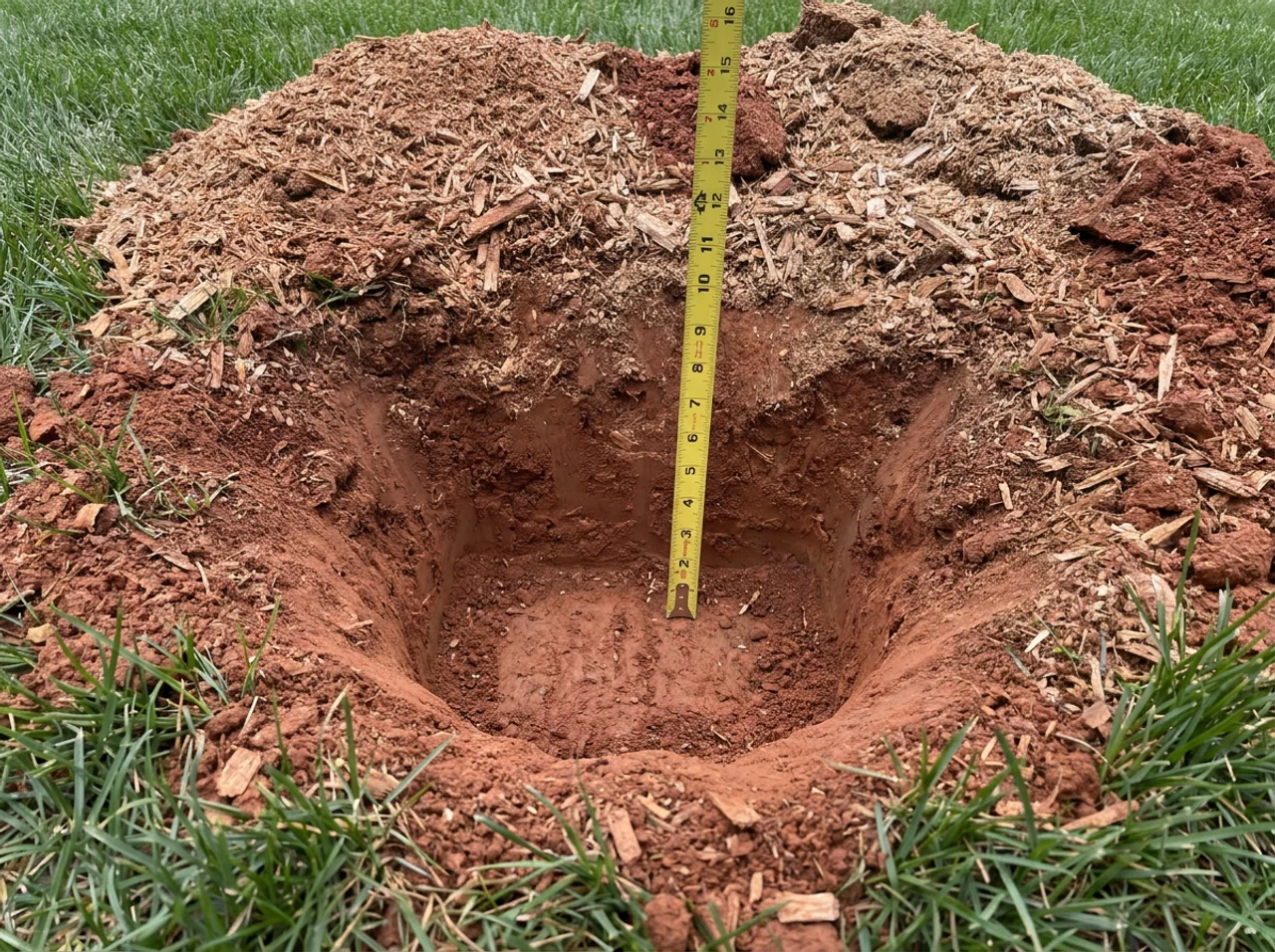
A flush cut looks fine for a month, then the stump swells, sprouts, and invites termites. We grind 8 inches below grade by default, rake the chips and level the spot, and the stump is simply gone. Need to replant or pour hardscape? Ask for the 12 in tier (+25%) or the 18 in tier (+50%).
Grinding vs. full removal
What stump grinding is, and how it is different from stump removal
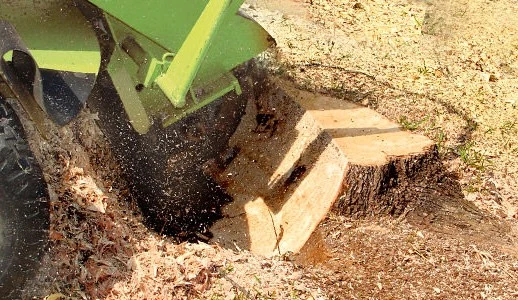
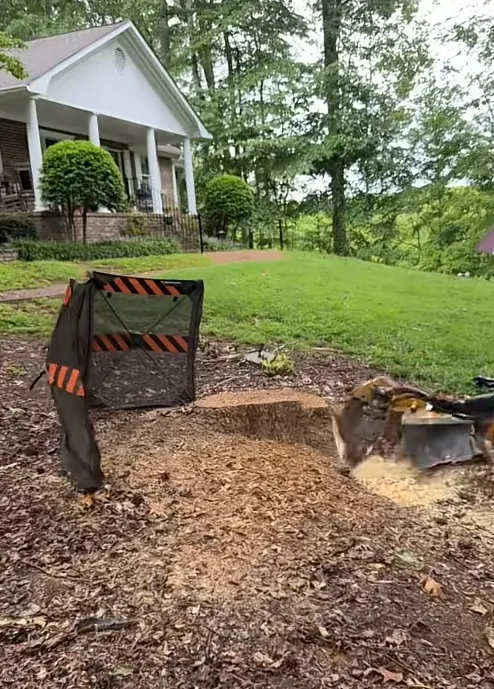
Stump grinding uses a carbide-tipped cutting wheel to chip the visible stump and the top of the root ball into small pieces. The wheel works below the surface, so the spot ends up several inches under grade. Roots that spread laterally through the yard stay in the ground and rot naturally over the next few years.
Stump removal is a different job. Removal pulls the entire root ball out of the ground, usually with an excavator or a skid steer with a stump bucket. That leaves a crater the size of the tree, plus tire ruts wherever the machine drove. Removal is the right choice when you need the roots gone for a foundation, a septic field, or a full replant. For seeding a lawn, planting a garden bed, or clearing sight lines, grinding is the cheaper, faster, kinder answer.
Our three depth tiers
Every grind we quote lands in one of three tiers: 8 inches for turf, 12 inches for replanting, 18 inches or deeper for hardscape and construction. Tell us the plan for the spot and we quote to the tier.
For the full explanation of why each tier exists, how to evaluate a contractor's answer, and what happens when the depth is wrong, read how deep should a stump be ground.
Firm written quotes go out in one business day. Free, no obligation, no pressure.
How we measure a stump
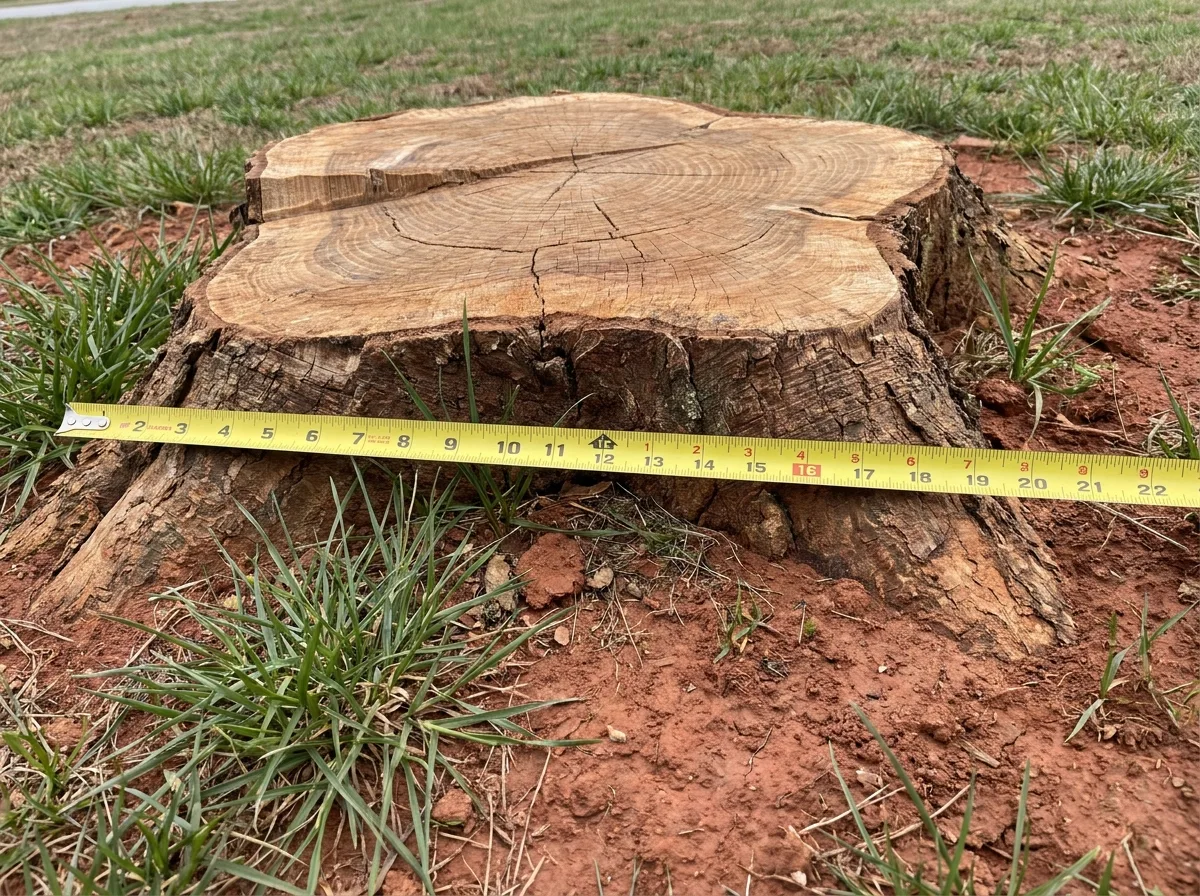
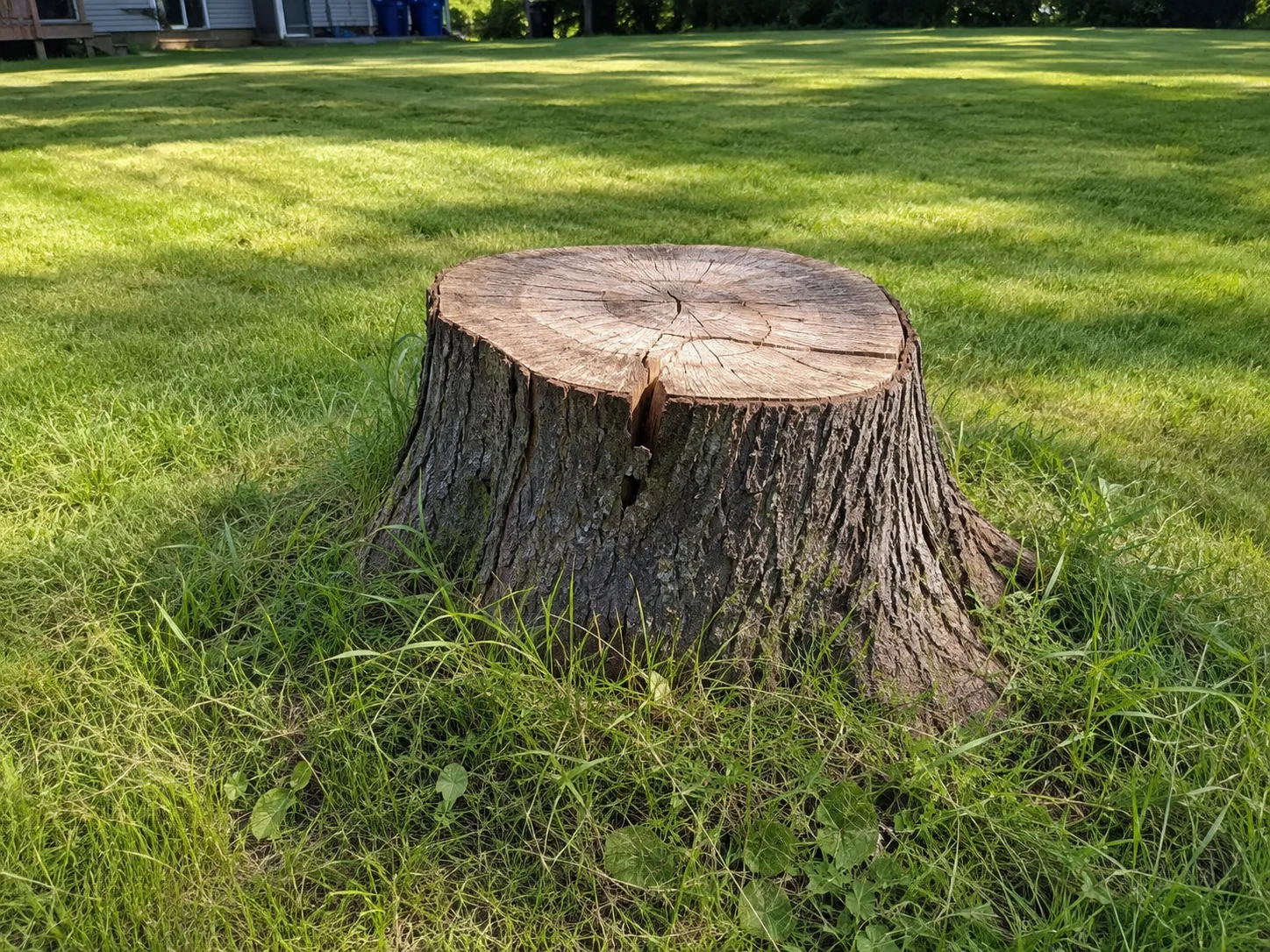
The number that drives price is the effective diameter, not the diameter across the cut face. Effective diameter is the average of the longest measurement across the stump at ground level and the perpendicular measurement, both taken including root flare.
An old oak with 12 inches of exposed wood on top can have a 32 inch effective diameter once you count the flare that spreads at soil level. That flare is what the wheel actually has to remove, and it is why photos matter for a quote. When you send us a photo, drop a tape measure across the widest point at the base and take the shot from waist height.
Cost drivers, in plain language
Six inputs decide almost every quote: effective diameter, height above grade, root flare severity, access width, terrain, and how you want the chips handled. Everything else lives in the margins.
- Diameter is the base rate. Bigger stump, more cutting, higher price.
- Height above grade multiplies the base rate because the wheel does more passes.
- Root flare adds surface area that has to be ground below grade, not around.
- Access decides which machine we bring. A 36 inch gate limits us to a compact grinder, and that costs more per stump than open-yard work.
- Terrain and travel affect setup time. Slopes, soft ground, and long driveway pulls all cost minutes we have to price in.
- Chip handling is either free (leave), a small add (spread), or a real add (haul or backfill).
See the full price map on stump grinding cost, or browse the full stump grinding guides library for depth, timing, and utility locates.
What is included in every job, and what is quoted separately
Every stump we grind includes site walk, utility clearance filing, the grind to the depth on your quote, raking the chips level with grade, and photos of the finished spot. If you kept the chips on site, that is the whole job.
Quoted separately, when you ask for them: chip haul-off, backfill with clean topsoil, seeding the spot, additional grind depth beyond your quoted tier, private utility flag work, fence panel removal and reset, and any work that requires a second machine.
Nothing gets added on the invoice that was not on the written quote. If a job runs into something we did not see in photos (buried concrete, hidden rebar, an unknown second stump under vines), we stop and call before the meter runs.
When stump grinding is the wrong tool
Grinding leaves the deeper root system in the soil. That is fine for grass, mulch, garden beds, and most ornamentals. It is not fine when the roots themselves are the problem.
Pass on grinding, and get an excavator, when the site is a foundation footprint, a septic drainfield, a retaining wall footing, a swimming pool dig, or a spot where a new large tree needs to go straight where the old one stood. In those cases the lateral roots have to come out, and no wheel gets deep enough to matter.
We will tell you this before we take your money. If your job is in that list, we can quote grinding as a first pass and refer you to an excavation crew for the rest.
Send two photos and a ZIP code. We will tell you honestly whether grinding solves the problem or not.
What happens to the chips
Grinding produces wood chips at roughly the same volume as the stump itself. On an average 24 inch yard stump that is two to four wheelbarrows. You have four choices.
- Leave them in a neat mound. Included, no charge. Fills the void as it settles, and works as free mulch around trees or beds. This is what most homeowners pick.
- Spread them nearby. Small add. We rake the chips out into a natural-looking layer up to 30 or 40 feet away.
- Haul them off site. Priced by stump inches. Adds a truck roll and a dump fee.
- Haul plus backfill. Priced together. We remove chips, drop clean topsoil, and compact it in lifts. This is the finish for a spot that has to hold sod, footings, or heavy furniture.
Red clay, backfill, and why the spot has to settle
The Piedmont sits on red clay that holds water in wet seasons and cracks in dry ones. Wood chips decompose slower in clay than in loam, so a chip-backfilled spot takes longer to settle. Expect the mound to compress six to twelve months after the job.
If you are seeding the spot, seed it slightly proud of grade and top-dress once the first winter has passed. If you are patio-ing over the spot, do not skip the topsoil backfill in compacted lifts. Chips will settle under pavers and pull the surface with them.
Public and private utility safety, and the NC 811 process
North Carolina law requires a locate ticket before any excavation, and grinding counts. We file the NC 811 request three business days before any job where public lines could be present. The utilities respond by marking gas, electric, communications, and water in the yard. We work inside the marked tolerance zone.
Private utilities are your call. Irrigation lines, invisible dog fence, landscape lighting, private wells, propane runs, and drain lines are not on the 811 map. If you have any of them, tell us on the quote form so we can flag them. If you do not remember, we grind conservatively around the likely paths and note anything we damage before we invoice.
Our process, from first message to documented finish
- Assessment. You send photos and a ZIP code. We measure from the photos, cross-check access on satellite, and price the job.
- Firm written quote. Within one business day, sent as a locked number with the grind depth, chip plan, and any add-ons spelled out. No pressure.
- Scheduling. Standard scheduling is inside a week. Rush windows available.
- Locate. We file NC 811 for you. You do not have to call.
- Grind day. Site walk, utility check, grind to spec, chips handled per your quote, rake level, photos of finish.
- Documented completion. Photos sent to your phone. Invoice matches the quote. Any surprises get called in before the meter runs.
Know the number before you call
No games. Slide to your stump size and see the honest range most jobs land in. Send a couple of photos and we'll send your firm written quote today.
A rough range in ten seconds. Your firm written quote is free and takes one business day.
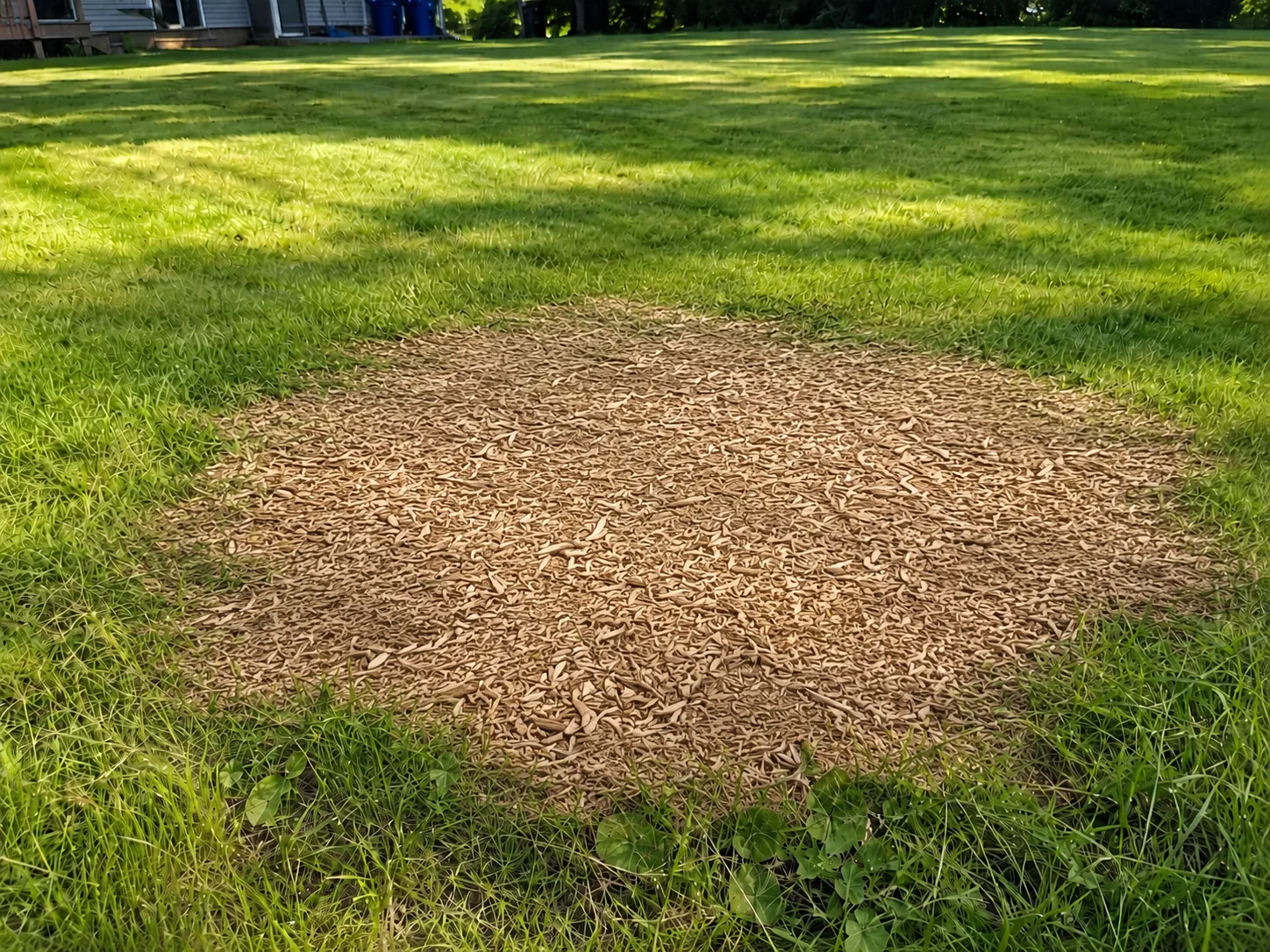
Drag the line. See the work.
Questions we hear every day
Something we didn't cover? Call and a real person answers, Mon–Sat, 7am–6pm.
(704) 780-2891Standard is 8 inches below grade, which is the depth we hit unless you tell us otherwise. That is enough to seed, sod, or plant flowers over the spot. If you plan to replant, we go to 12 inches. For a patio, driveway, or new tree, we go 18 inches or deeper.
Surface roots get ground with the stump. The deeper lateral root system stays in the soil and decomposes over three to seven years. If your project needs the root ball out, that is excavation, not grinding, and we will tell you honestly.
Your call. We can leave them in a neat mound as free mulch, spread them nearby, or haul them off the same day. Grinding a typical yard stump produces two to four wheelbarrows of chips.
Yes. Our compact grinders fit through a 36 inch gate and run on turf-friendly tracks. Fenced backyards, slopes, and fence-line stumps are routine work.
No. As long as we have access to the stump and any gate codes, we can grind while you are out. We photograph the finished spot and can walk it by phone if you prefer.
We file the NC 811 locate request before any job where lines could be present, and we work with the marked clearances. Private utilities like irrigation, invisible dog fence, and low-voltage lighting are your responsibility to flag, and we quote around them.
The chip pile compresses as it decomposes, so the spot settles for the first year. We rake it slightly proud of grade so it lands flush. In Piedmont red clay, expect a second top-off with soil in year two.
Most residential stumps take 15 to 45 minutes on the machine, plus setup and cleanup. A full site visit with one grinder handles four to eight typical stumps in a half day.
By the stump, priced from the effective diameter, height above grade, and site conditions. You get a firm written number before we start. See our stump grinding cost breakdown for the full price map.
Most requests get a firm quote within one business day. Standard scheduling is inside a week. Same-day and 72-hour rush windows are available for an added fee.